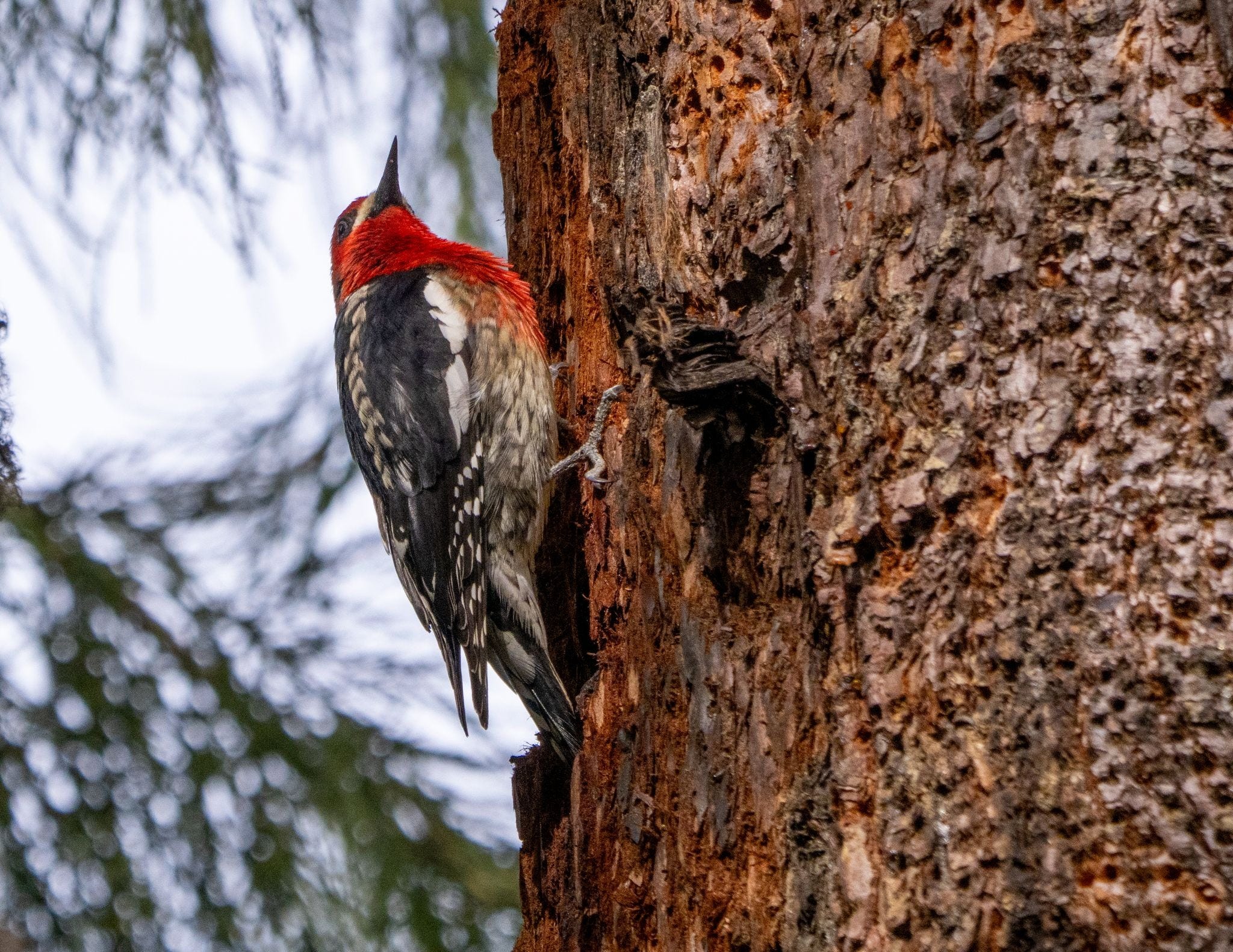
One of the great things about birding is that you can do it anywhere. There are always new things to see and learn, and visiting the grandchildren in Oregon provided a prime opportunity. Late March is full-on spring in the Willamette Valley with resident birds getting down to business and migrants passing through in numbers. Beyond the fun of seeing unfamiliar species in a new place I was able to learn a few new things about birds we are familiar with here in the Adirondacks.
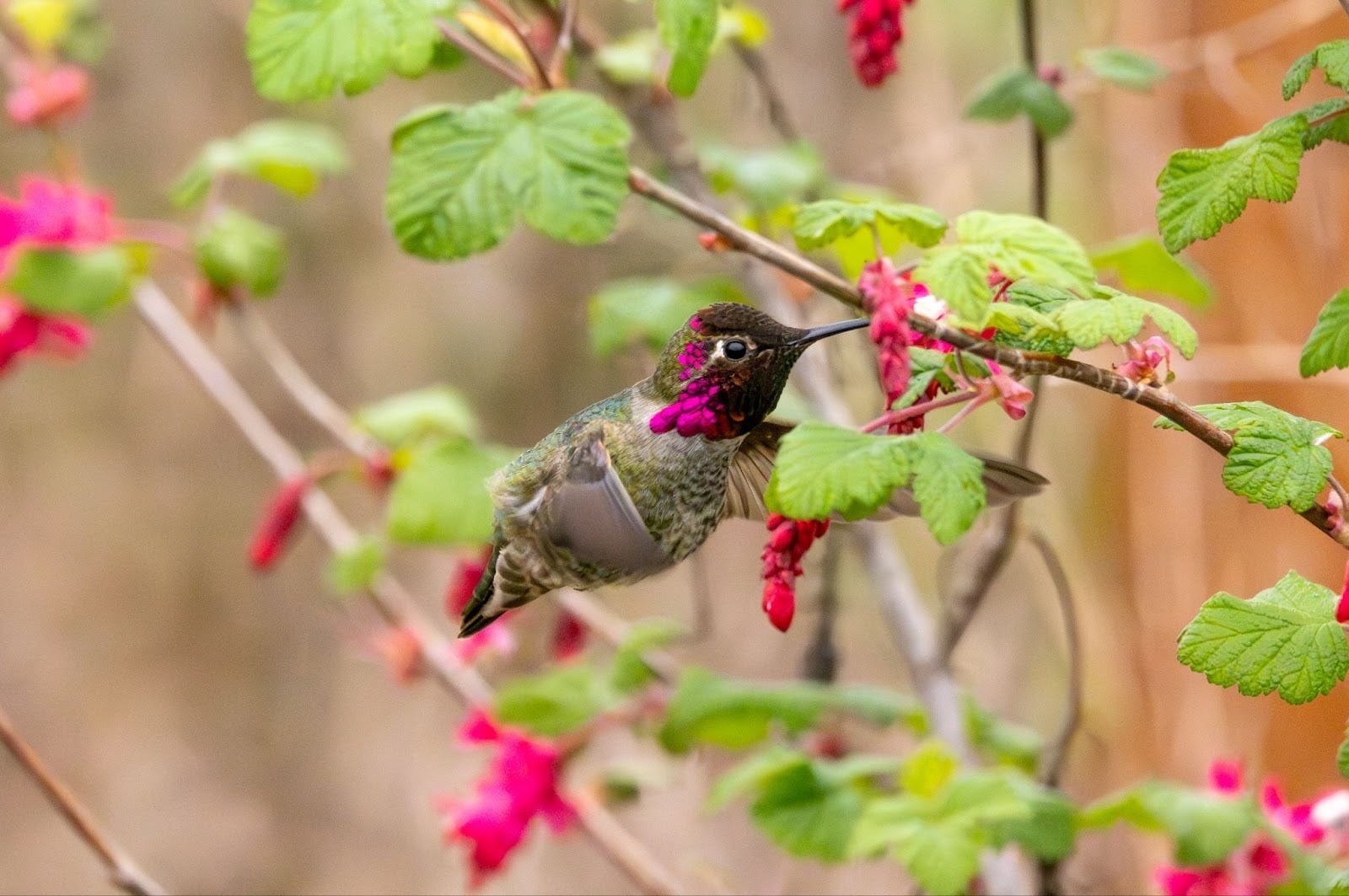
Anna’s Hummingbird
Anna’s Hummingbird is common in the farm country west of Portland Oregon. Unlike the Ruby-throated Hummingbirds we see here in the Adirondacks they overwinter; going into a hibernation-like state of torpor when it gets cold.
With the assistance of the Merlin Bird ID app on my phone I was able to see over 60 bird species during the visit. My old ears don’t hear bird songs and pips as well as they used to, but Merlin hears them. And knowing which species are around makes it possible to find birds I would otherwise miss. The ability to recognize bird calls and songs is the super power that expert birders rely on, and Merlin makes that available to everyone.
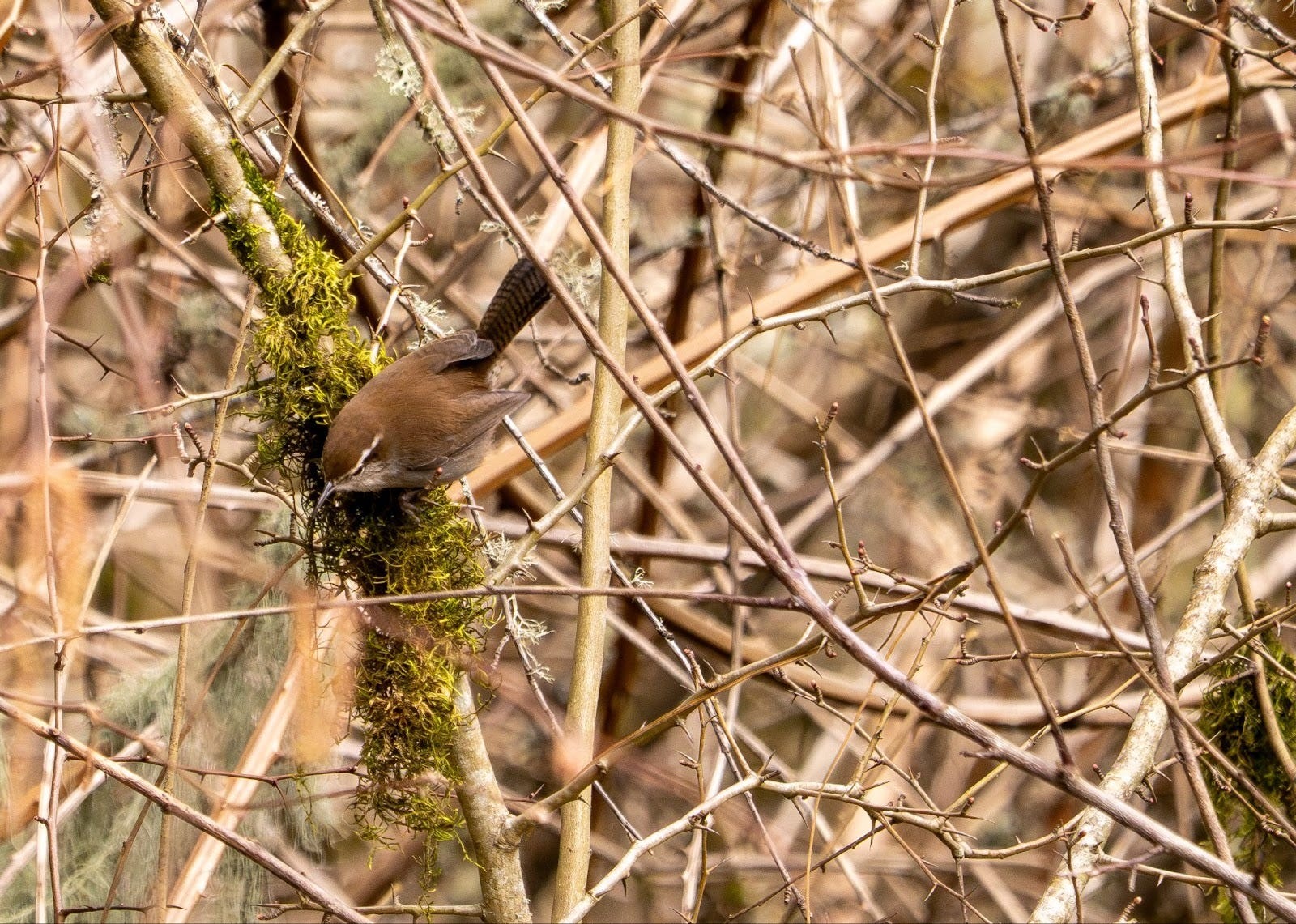
Bewick’s Wren
Much like the House Wrens we see here in the Adirondacks the Bewick’s Wren has a complex and melodic song. Hearing a wren trilling away in the underbrush is a sure sign of spring.
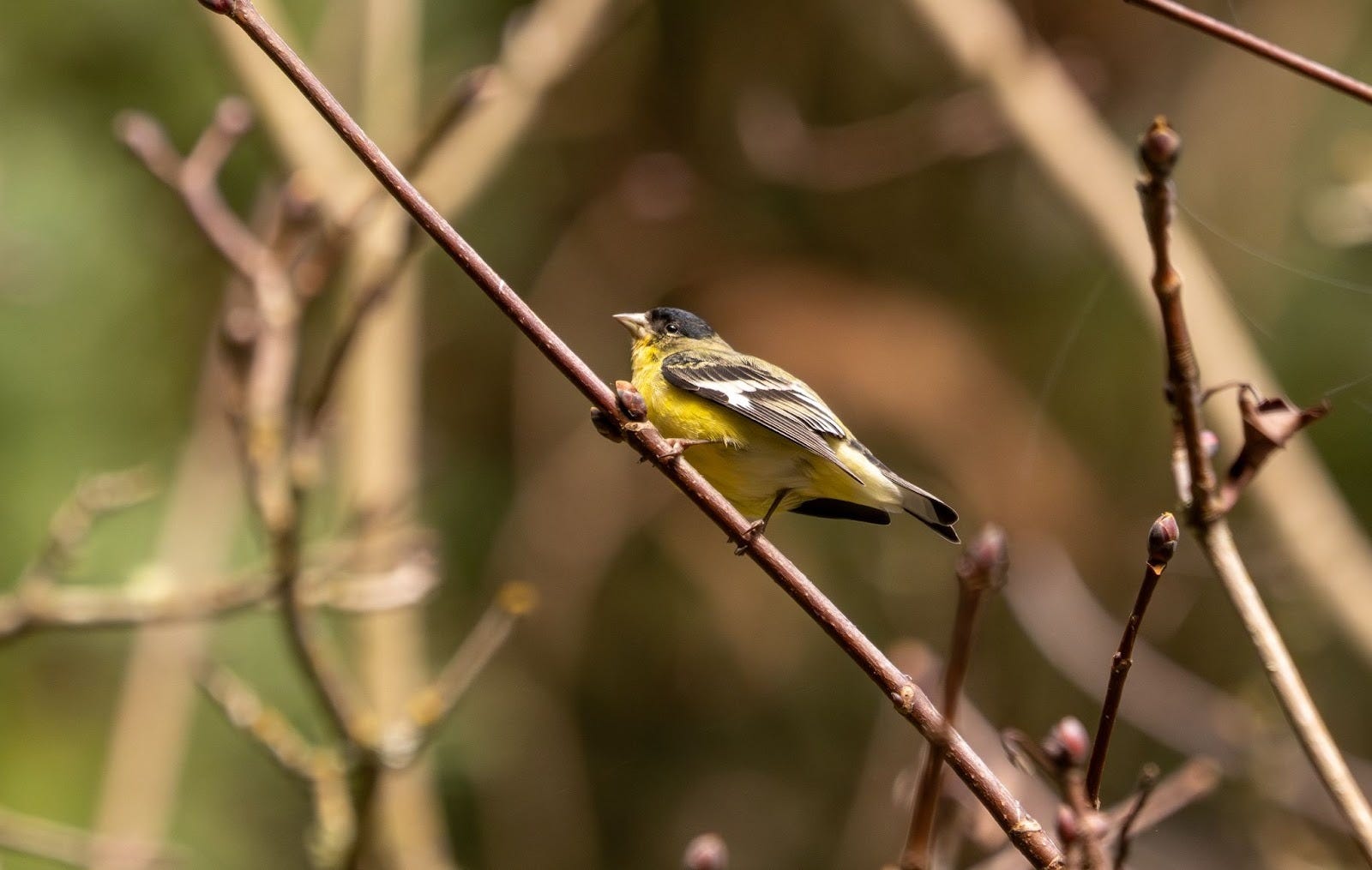
Lesser Goldfinch
Despite the name, the Lesser Goldfinch may be even more distinctive than the American Goldfinches we see here.
As for the lessons learned, watching a bird closely, hearing it, seeing the identifying marks and the way it moves builds familiarity. This makes it much easier to recognize that species in the future.
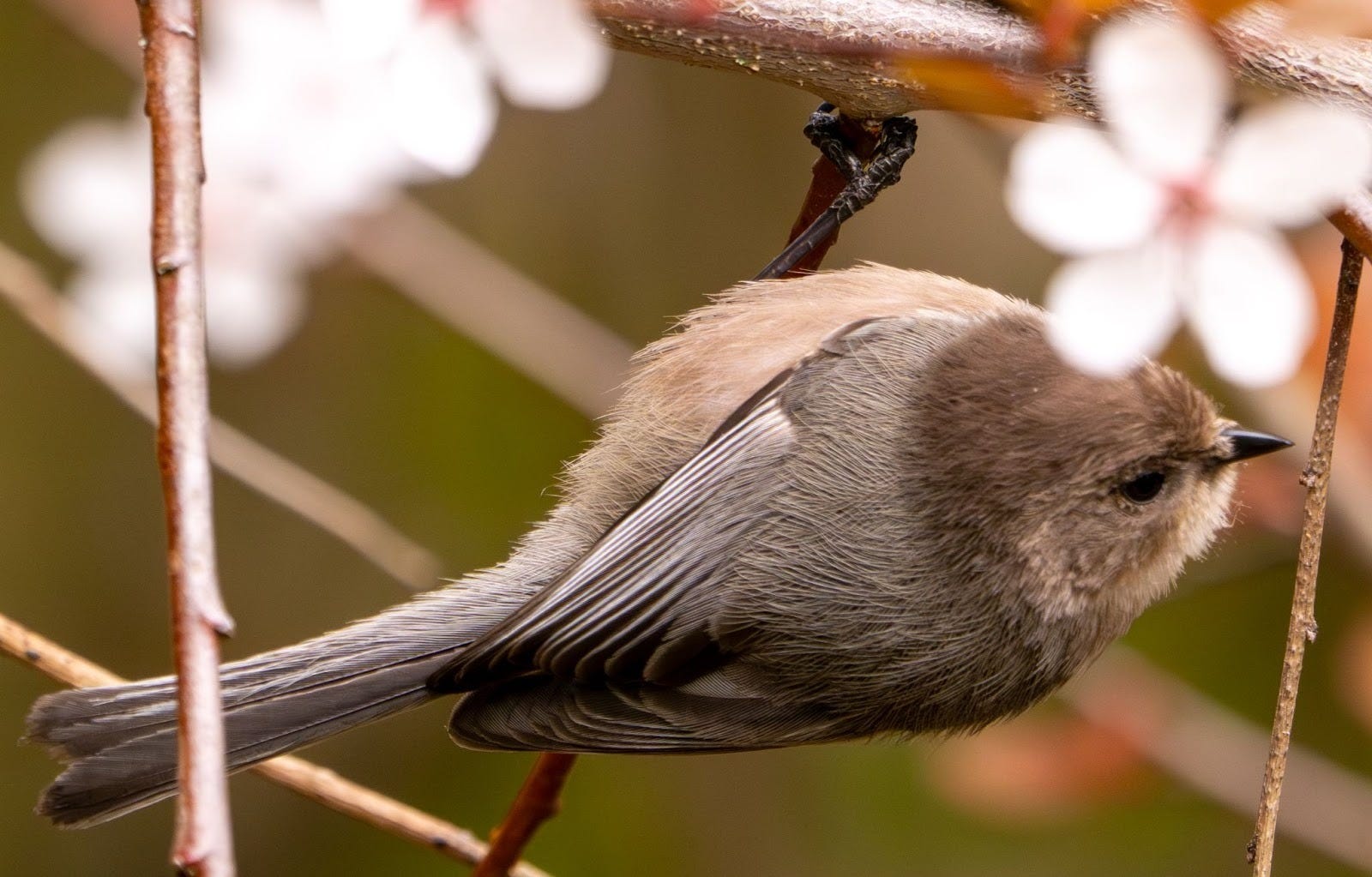
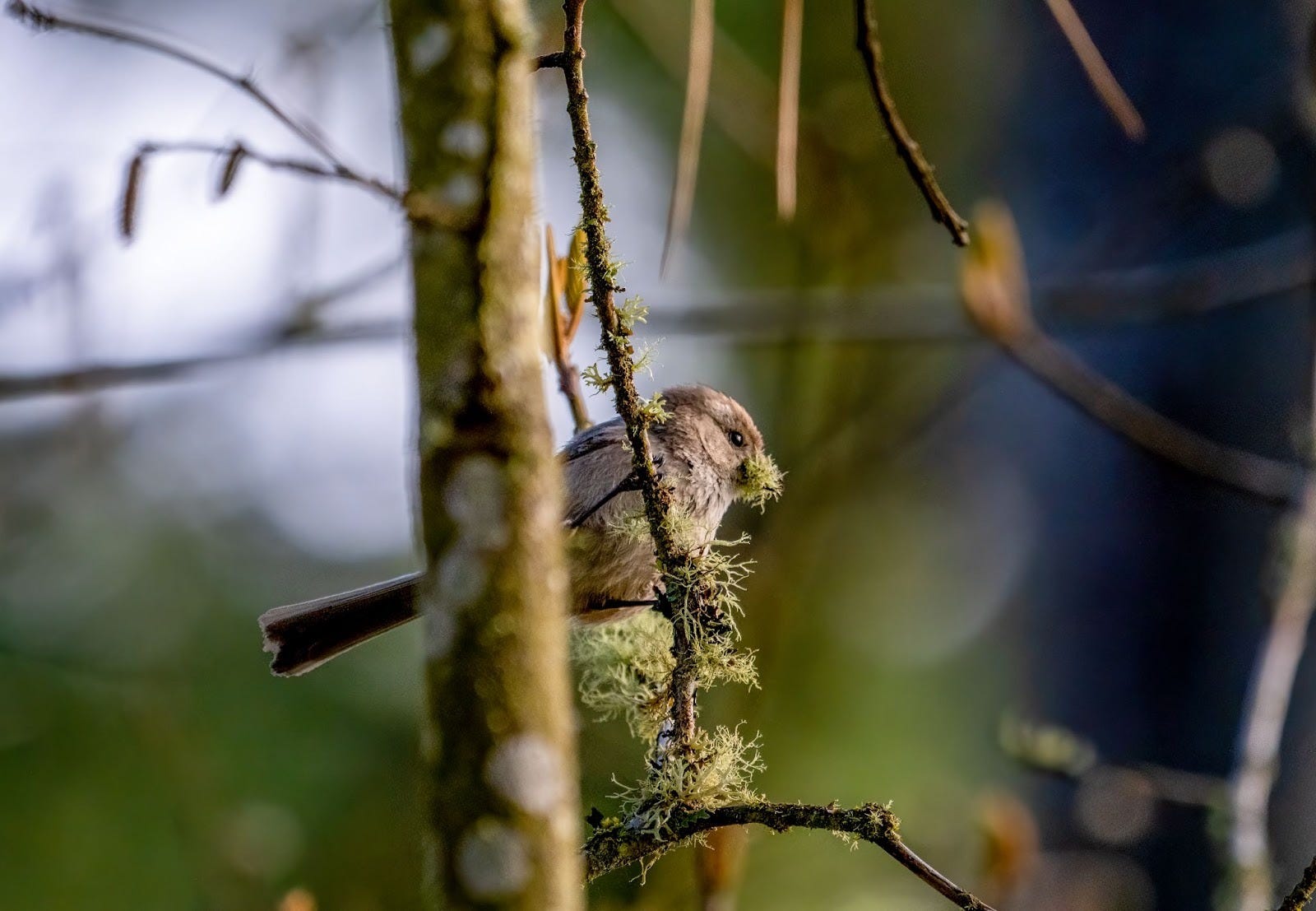
Bushtit
These tiny birds are easily recognized by their size and behavior. If you see very small birds foraging in flocks of from five to 20 birds, you are almost certainly looking at Bushtits. Bushtits are difficult to photograph because they never stop moving. Probably a good idea for a bird only slightly larger than a hummingbird.
Two species of Kinglets, the Ruby-crowned and Golden-crowned, are both present in the Adirondacks and I see them here from time to time. But after an hour watching a Ruby-crowned stake out its nesting territory I gained a new appreciation for this tiny bird. And seeing the bright red crown sealed the deal. I had never actually seen this bird’s name-sake ruby-crown before this trip.
Golden-crowned kinglets are more distinctive, and easy to recognize if you get a good look, but they tend to stay up in the tree tops making that difficult. However, the Merlin app’s identification of the faint calls while I was able to see the bird singing high above made for a confident ID.
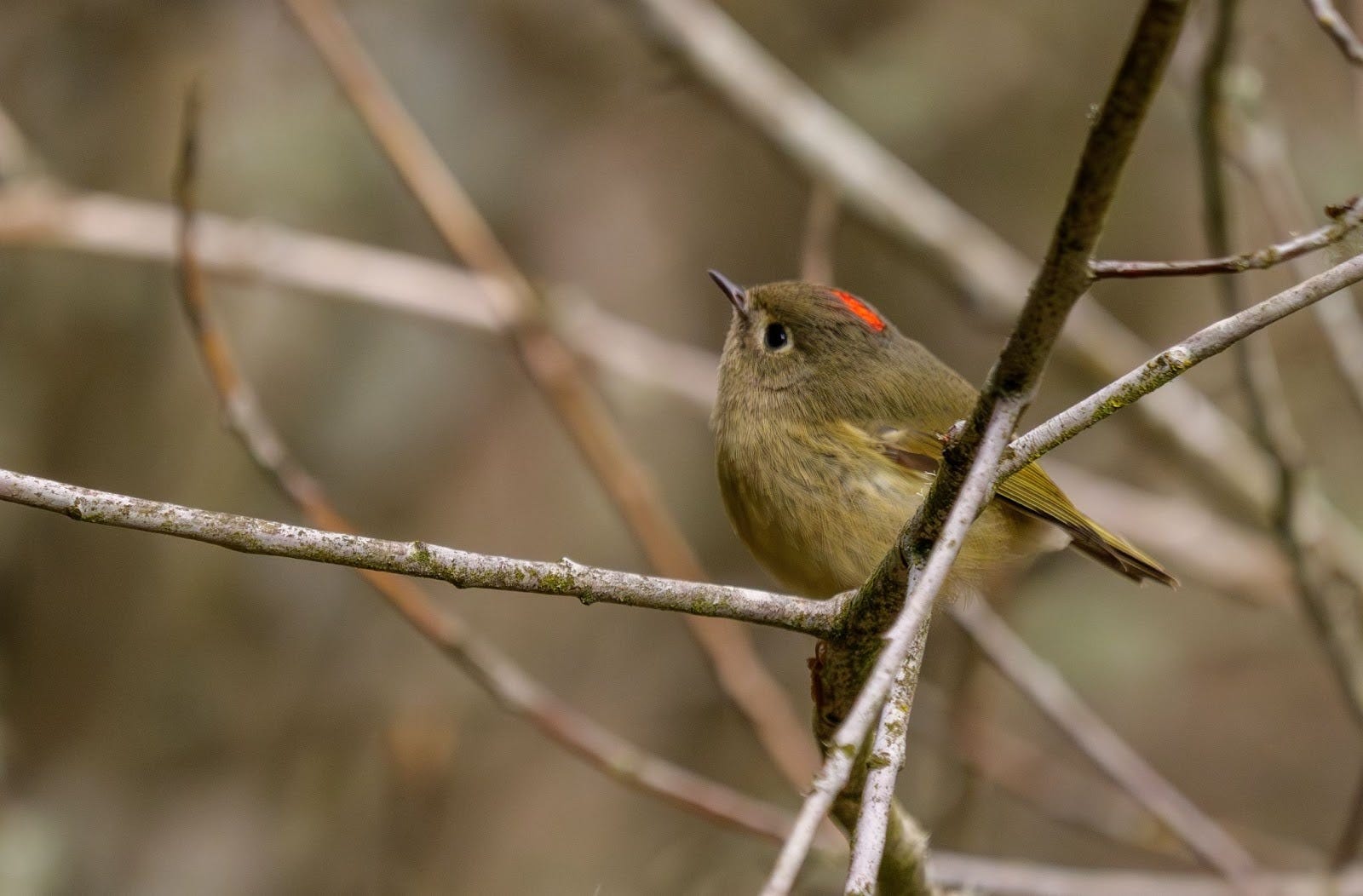
Ruby-crowned Kinglet
When this bird is really worked up the crown can be even more prominent, but at least I glimpse of the red.
It was also fun to see Chestnut-Backed Chickadees. If the Adirondacks were to have a bird mascot I would vote for the Black-capped Chickadee. Chickadees are outgoing and fearless and the black-capped variety is ubiquitous. A second chickadee species, the Boreal Chickadee, is also present in the Adirondacks, though it is increasingly rare. This has made the Boreal Chickadee my nemesis. I’ve traveled to likely places several times to try and see this specific bird but, so far, no luck. Seeing the Chestnut-backed variety in Oregon gave me hope, and reinforced my rule; never let a chickadee pass without taking a closer look.
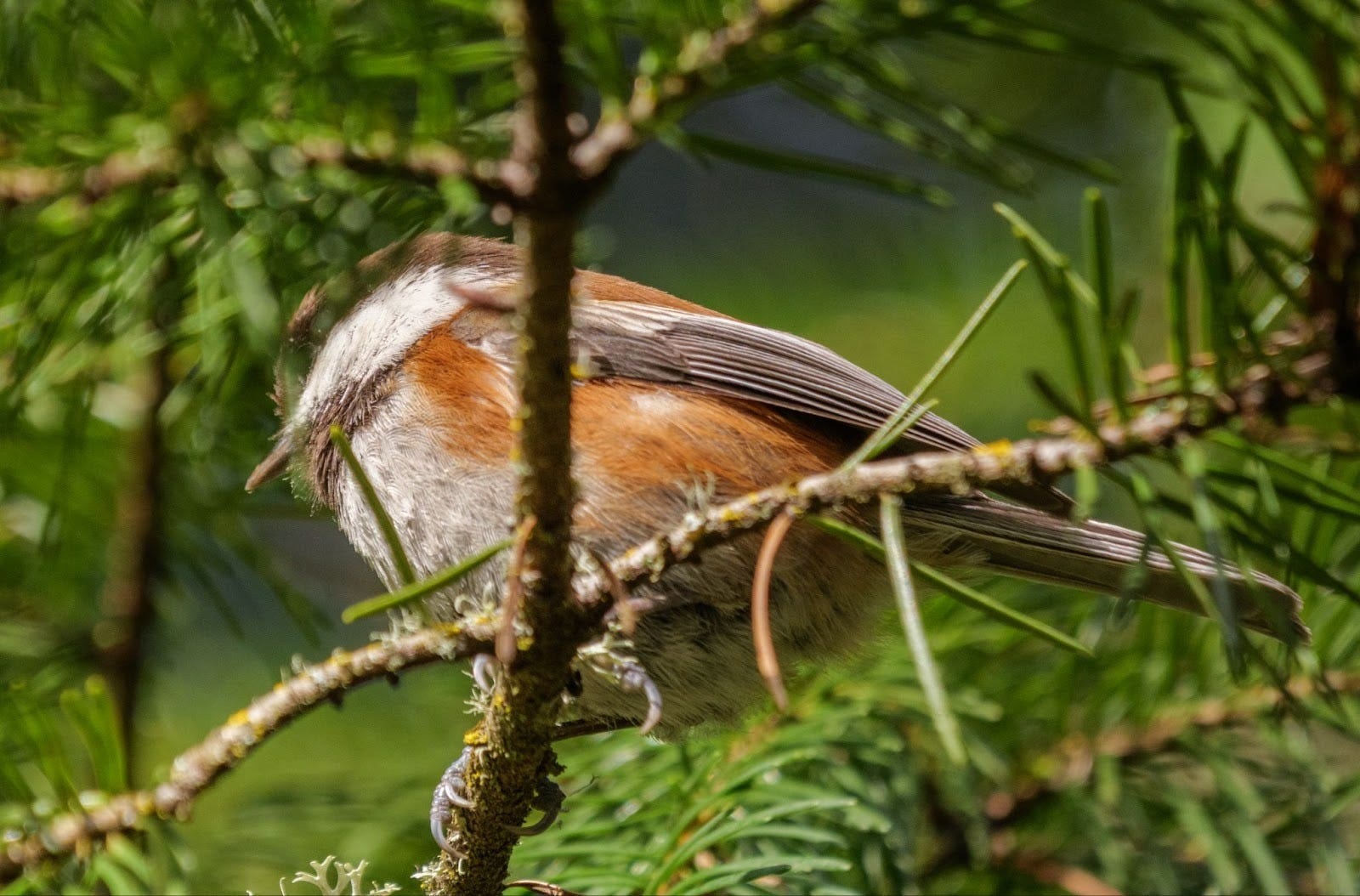
Chestnut-backed Chickadee
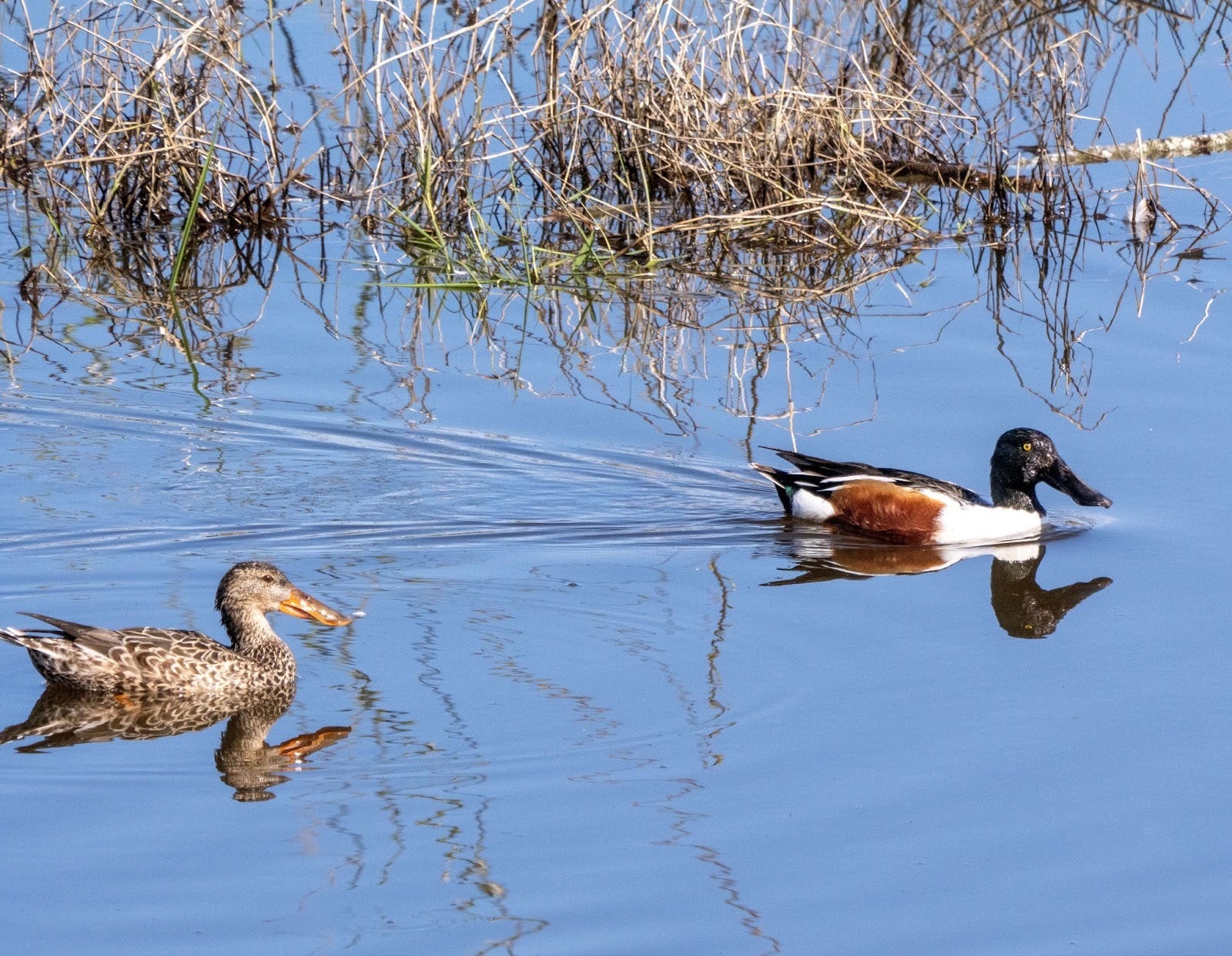
Northern Shoveler
A bill that only a mother could love
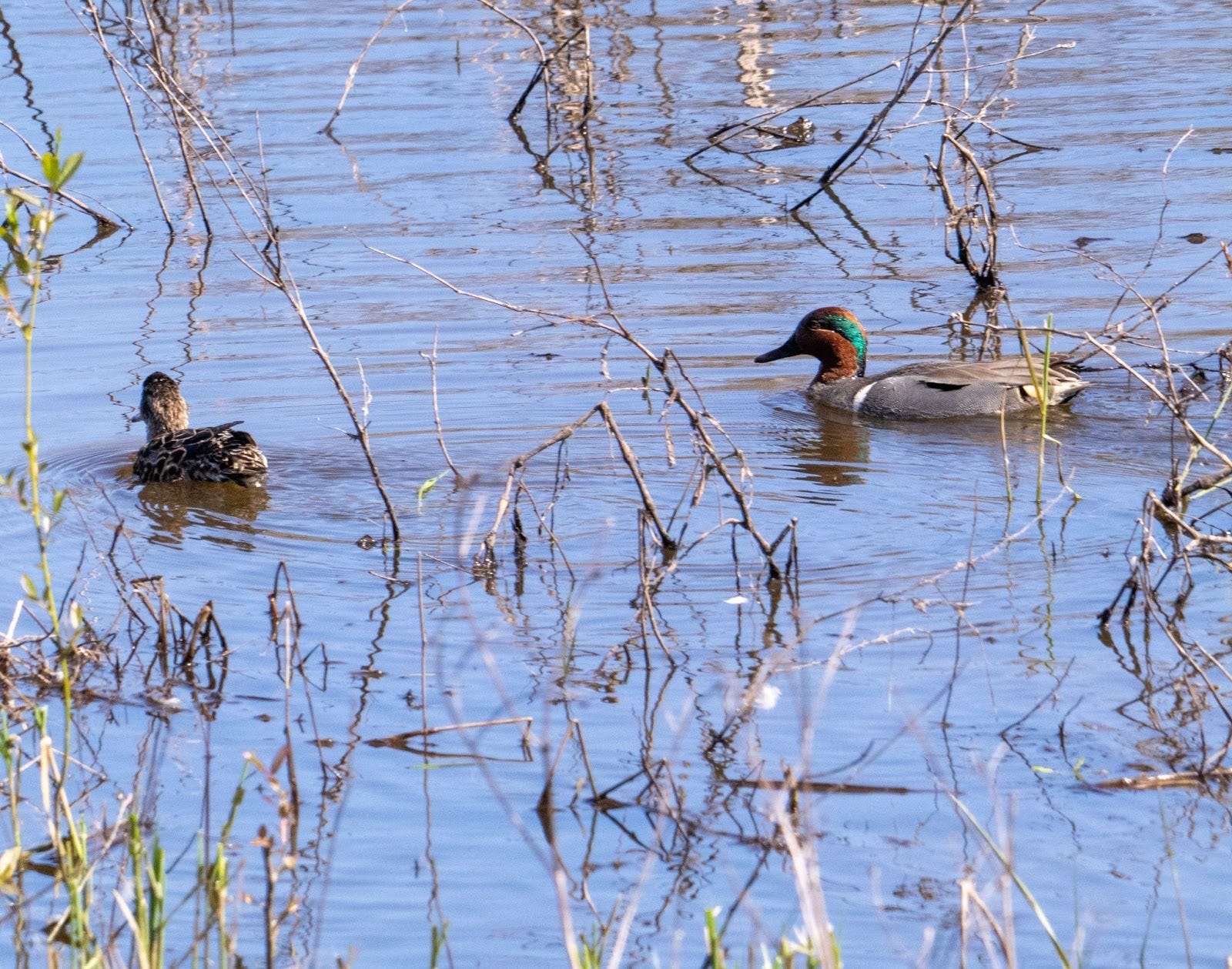
Green-winged Teal
The central Adirondacks is not a great place to see the water fowl and shorebirds. In summer we have loons, geese, ducks, herons, bitterns and a single wader; the spotted sandpiper. But the vast array of water birds seen in Oregon is enough to make your head spin. Looking out over a small pond filled with Northern shovelers, Cinnamon and Green-winged Teal, Coots, Widgeons, Hooded Mergansers, Wood Ducks and a half dozen species of long legged wading birds had me searching through my bird books for IDs. Among the waders, the Lesser and Greater Yellowlegs are distinctive, making it easy to say, “it’s a yellowlegs”. The trouble comes in telling the two species apart. The Greater variety is a bit larger, but that is only obvious when you see both species side-by-side. We have a similar difficulty separating Downy and Hairy Woodpeckers. The size and shape of their bills is a distinguishing feature but you need familiarity to be able to recognize that.
In the case of the yellowlegs the best differentiator is the call. At the Wapto Lake National Wildlife refuge I found myself standing alongside a couple of birders debating whether the bird in front of us was a Greater or Lesser Yellowlegs. I commented that Merlin identified it as a Lesser. Their disappointed expressions provided yet another learning opportunity. It might be okay to use Merlin for casual IDs, but real birders were not going to stoop so low. Oops.
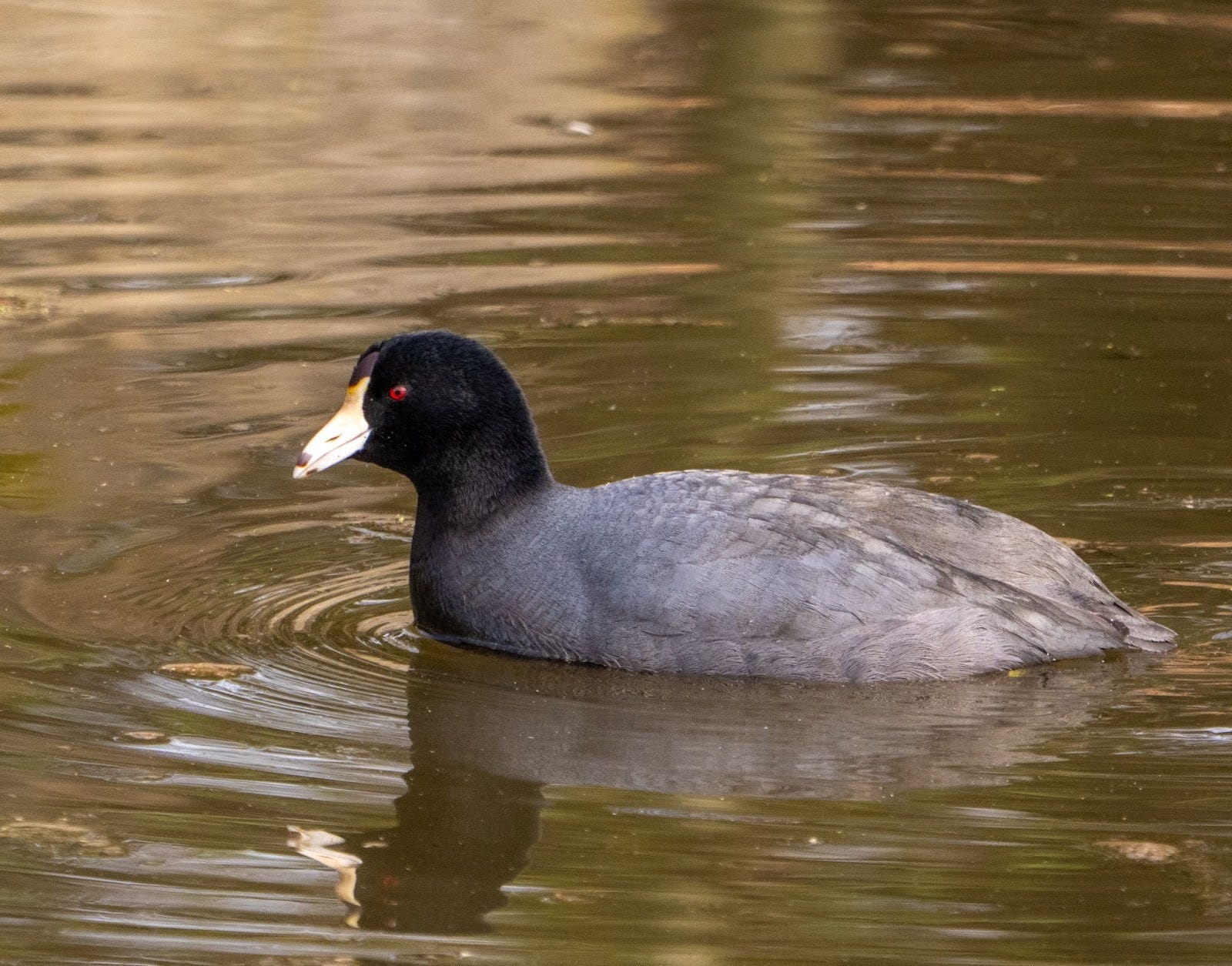
American Coot
Common and unmistakeable
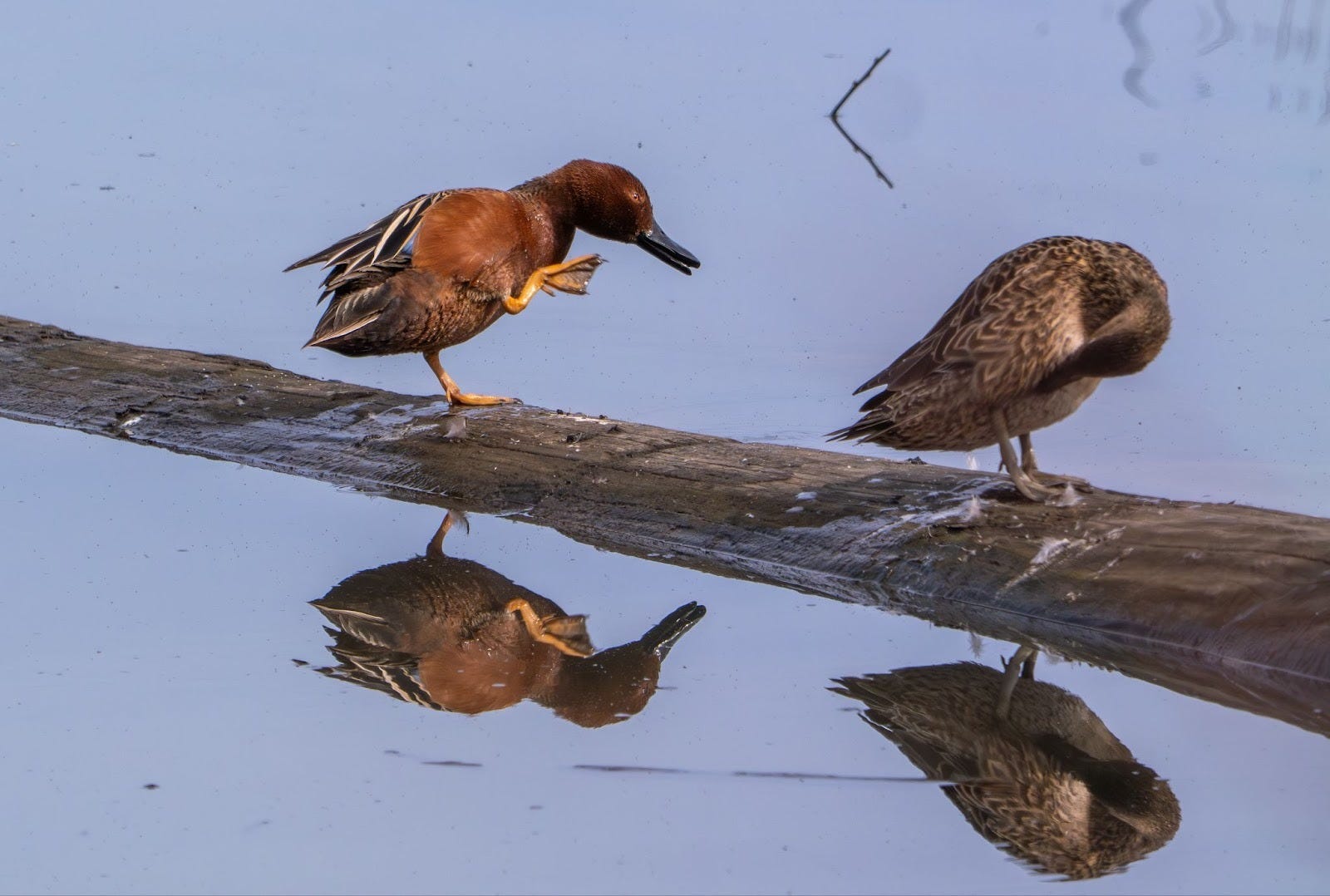
Cinnamon Teal
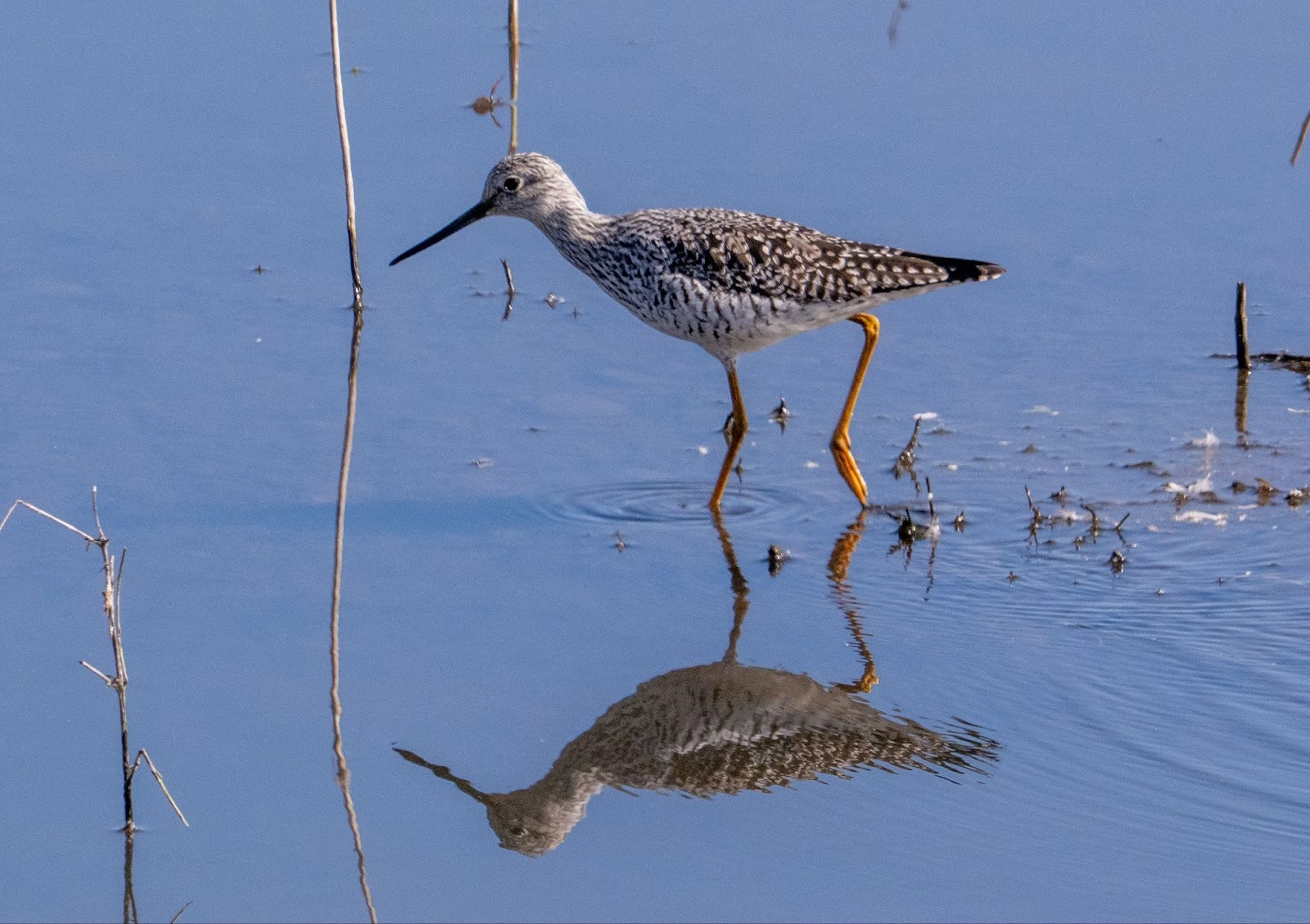
Greater Yellowlegs
(at least that is what Merlin thought it was)
This trip also reinforced something I’ve long known about bird photography. The key to getting good bird pictures is patience, watching and waiting for the right opportunity. Especially when you are trying to photograph small birds lurking in dim places. It’s tempting to wander around trying to get pictures of whatever appears in front of you, but the better approach is to identify a place where the bird might land, with the lighting and background you want . Then be ready to get the photo if the bird cooperates.