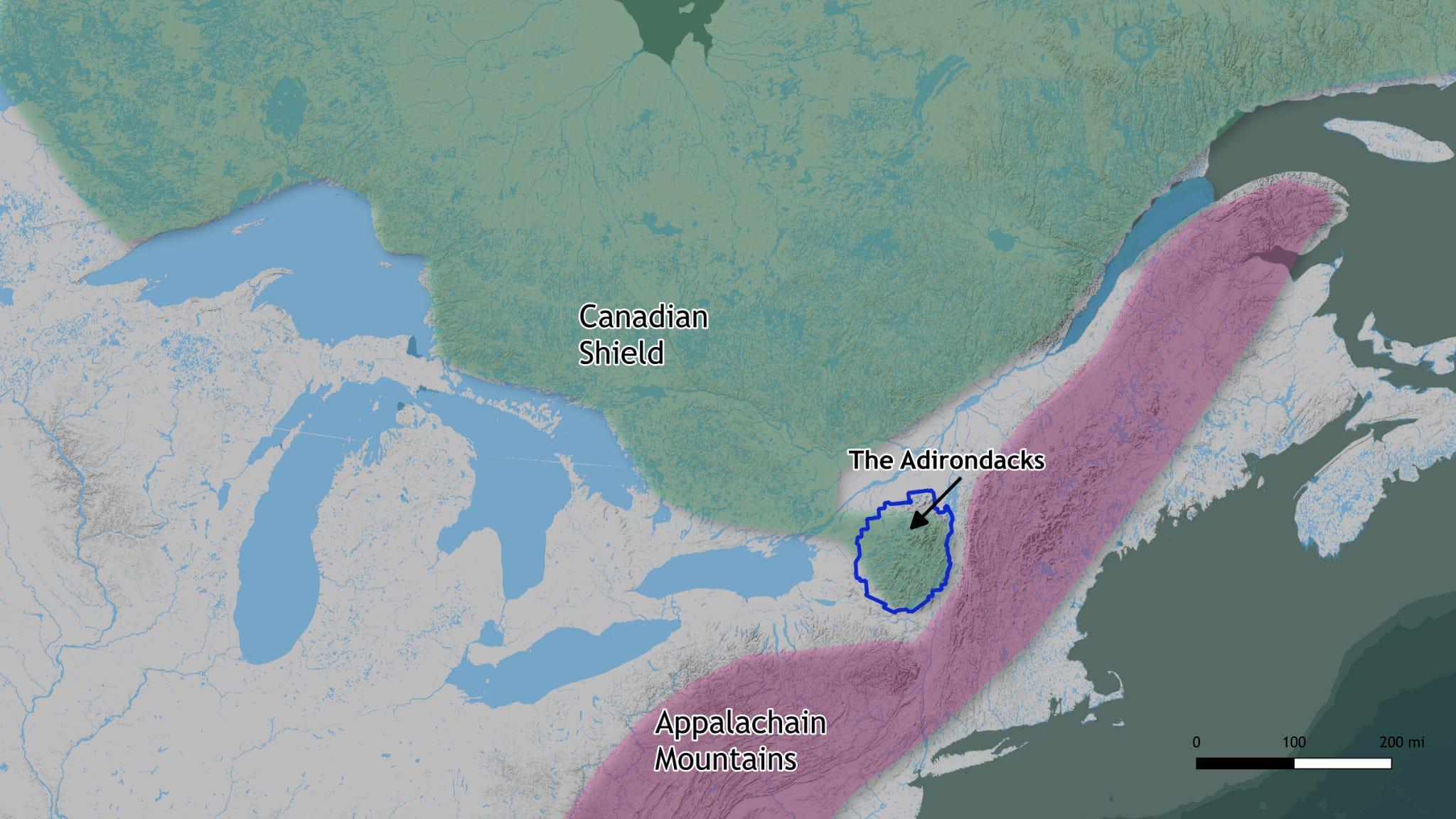
Many mountainous areas are characterized by peaks arrayed in rows, pushed up at a plate boundary by tectonic activity. The Adirondack region is different, often described as a raised dome, a node of continental rock hanging off of the Canadian Shield. The dome puts a floor under the Adirondack upland at an elevation around 1500 feet.
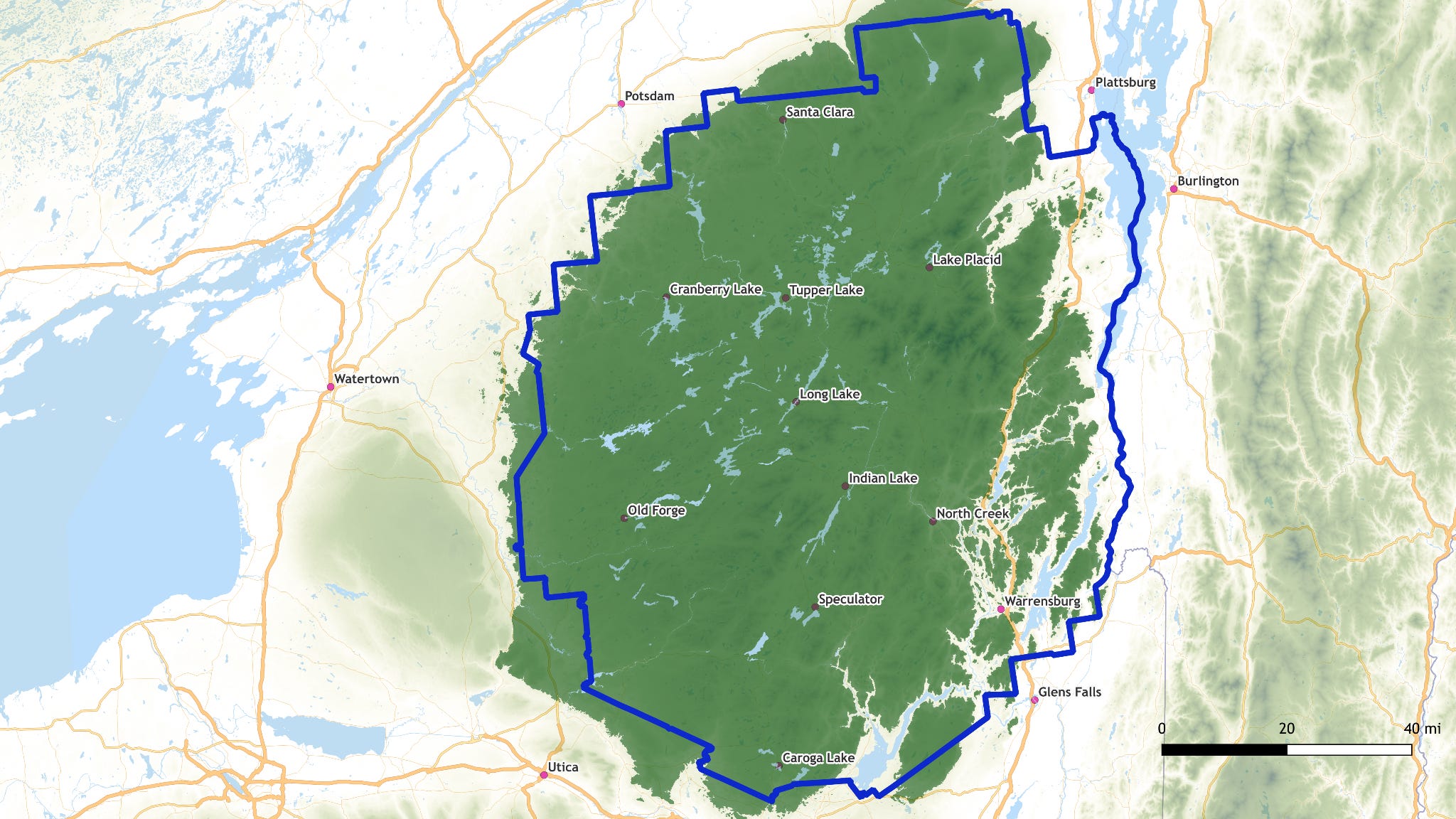
The 1000 foot elevation profile (the dark green area) coincides roughly with the “Blueline”, the boundary that defines the extent of the Adirondack Park and Forest Preserve. The elevation comes with lower average temperatures and enhanced precipitation that support ecological communities commonly associated with areas several hundred miles to the north.
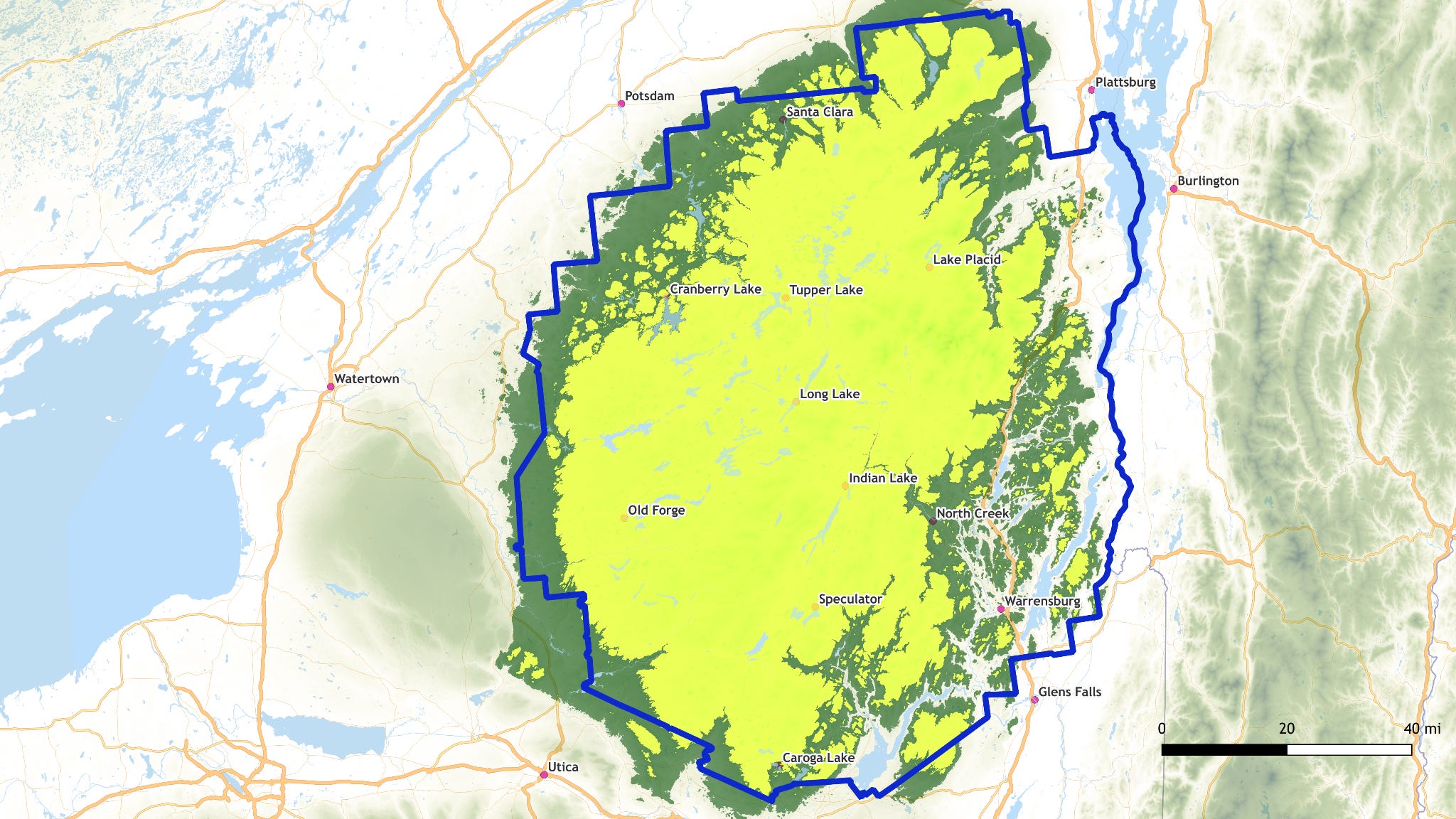
The Adirondack region is surrounded on four sides by temperate forests where oaks, Ash and Hickories dominate the forest canopy. In the Adirondacks, Spruce, Balsam Fir, and cold tolerant hardwood species take over above 1500 feet.
The effects of elevation on ecological conditions are much the same as moving northward and a common rule-of-thumb is that 1000 feet of elevation is the same as 400 miles of northward travel. This guideline provides a starting point for comparison but many factors come together to set the ecological context for an area and it is not a one-to-one equivalence.
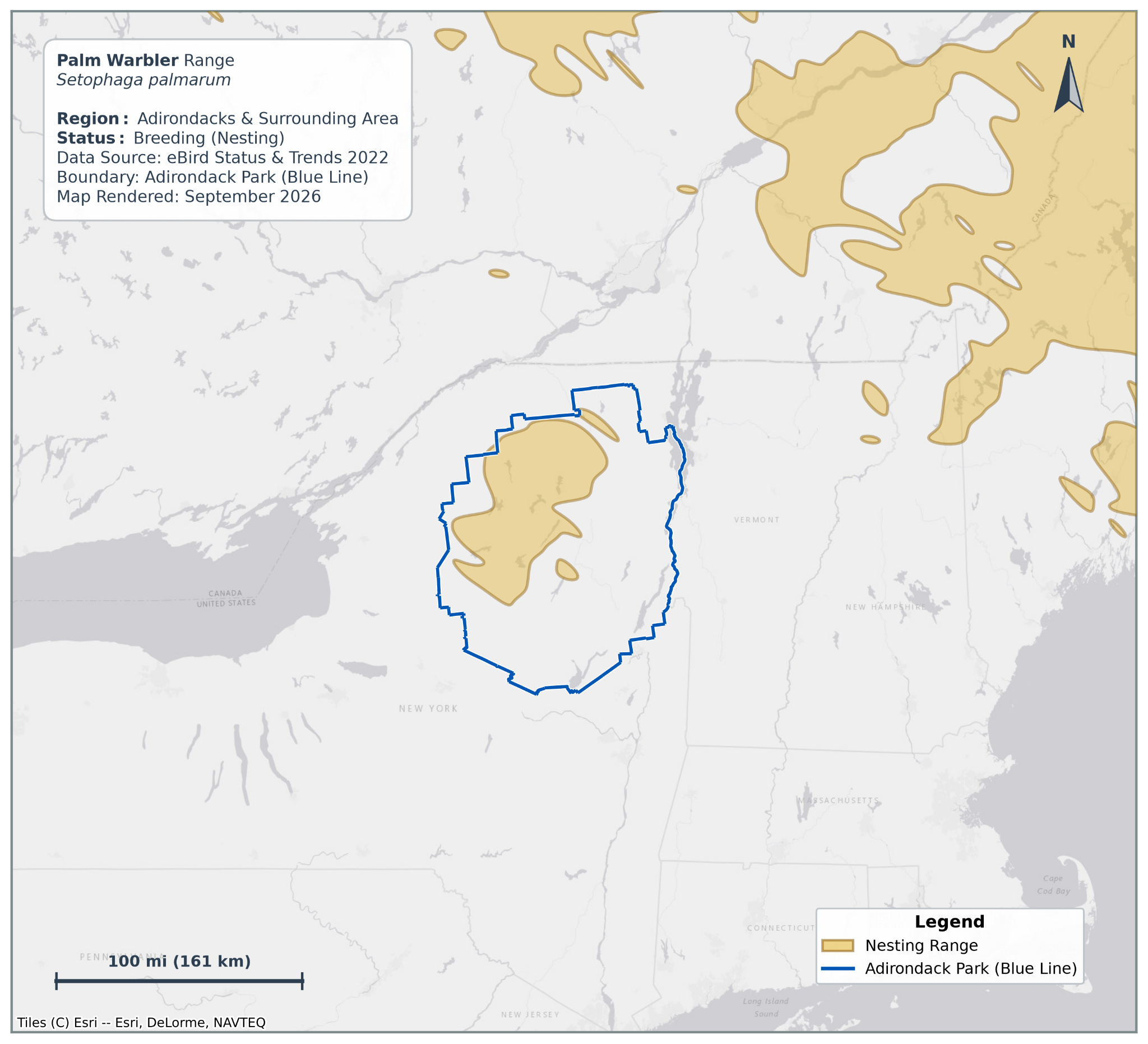
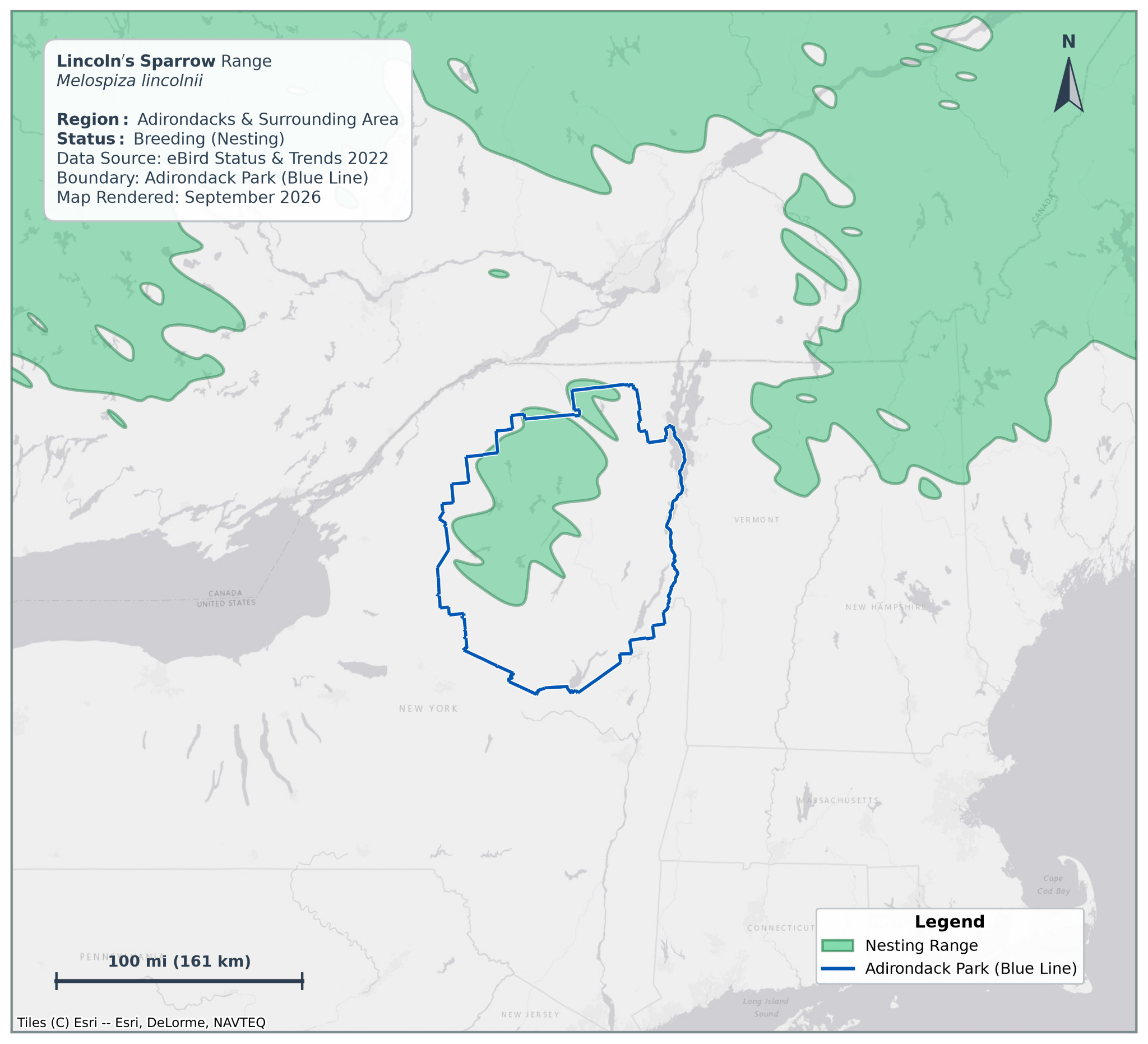
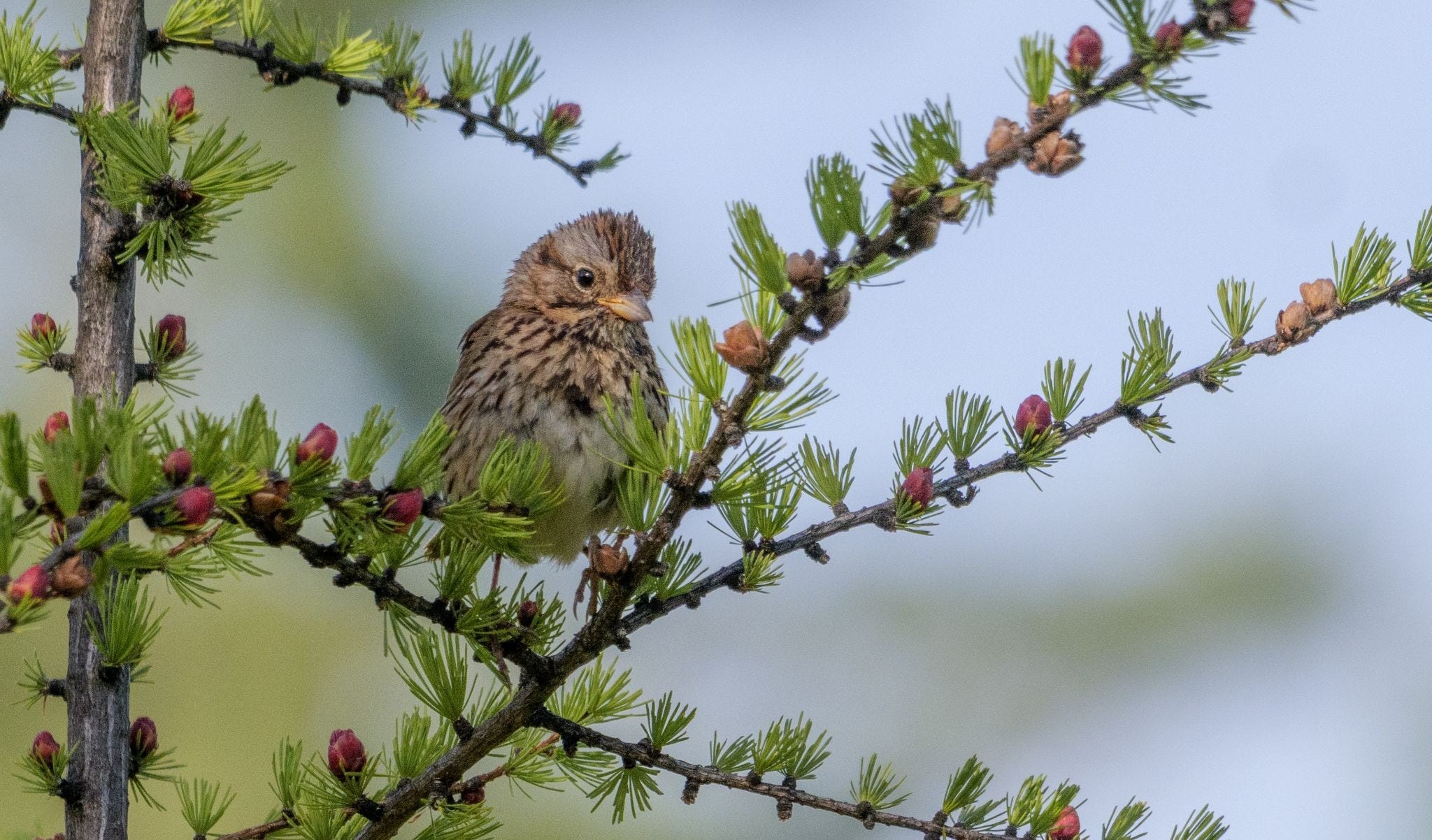
However, using bird nesting data from eBird we can see the effect. Birds are able to readily alter the range they inhabit as conditions change and a dozen or so species that nest in the Adirondacks are cut off from larger populations of that species. This is in part a hold over from the time when species moved in following the retreat of the ice sheet 15000 years ago. And over the last 50 years some birds that previously nested in the region have fled north while others from the south have moved in.

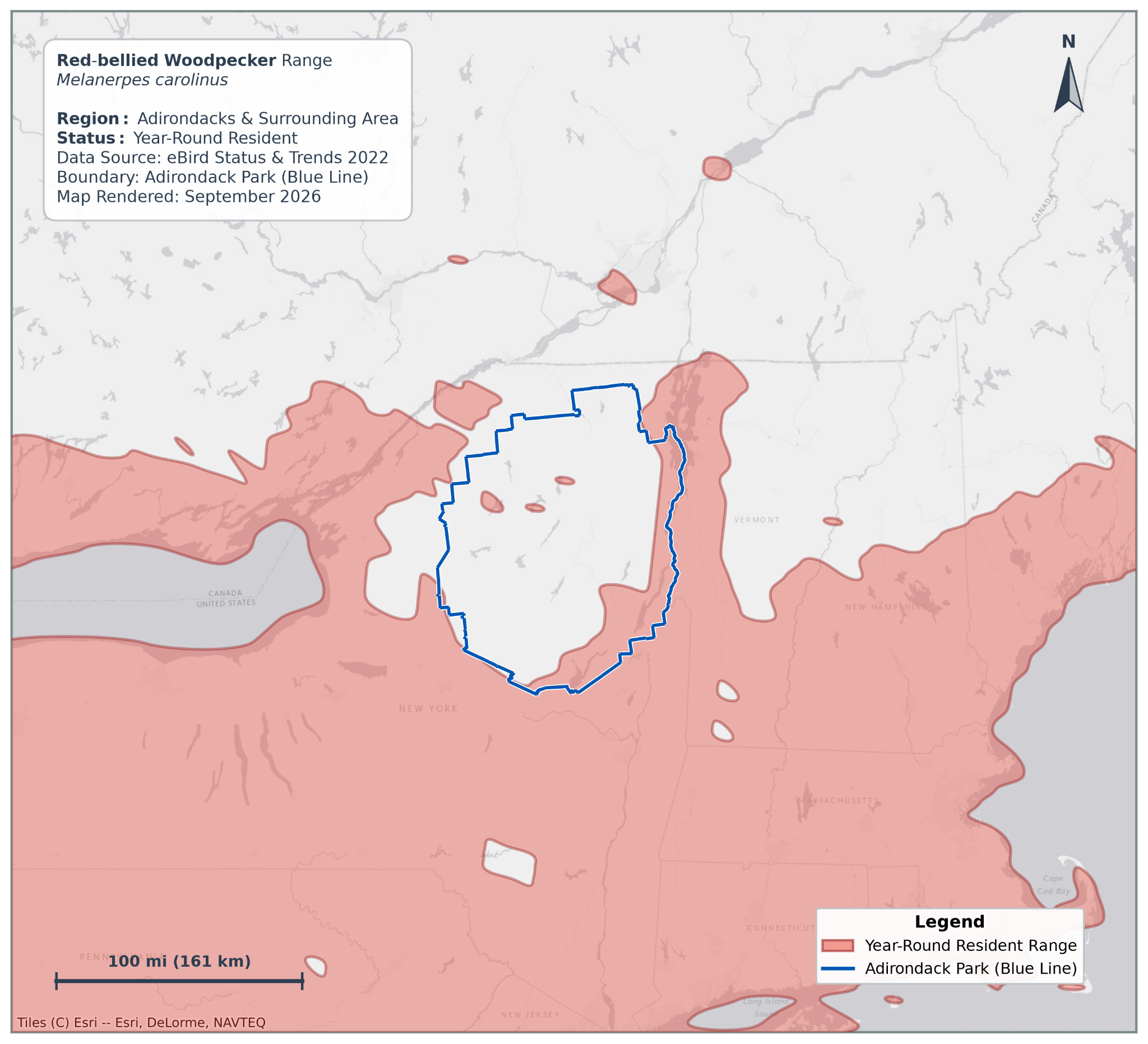
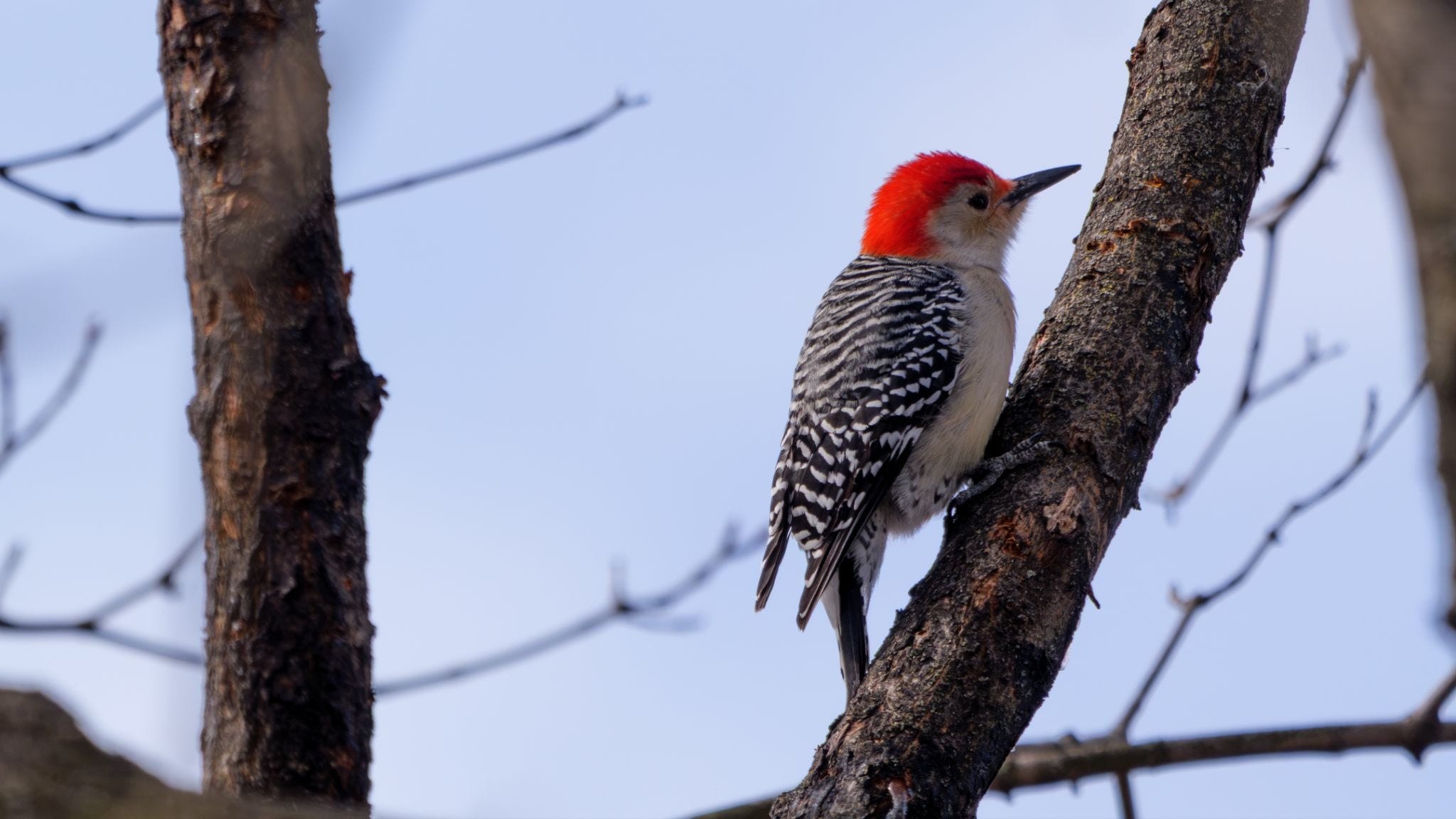
The Red-bellied Woodpecker is among the species that have moved north in recent decades. This species is a common year round resident throughout most of the eastern United States but until recently it was unknown in the Adirondack core.