
For an Adirondack naturalist, winter simplifies things.
naturalist: a person motivated by curiosity to learn about nature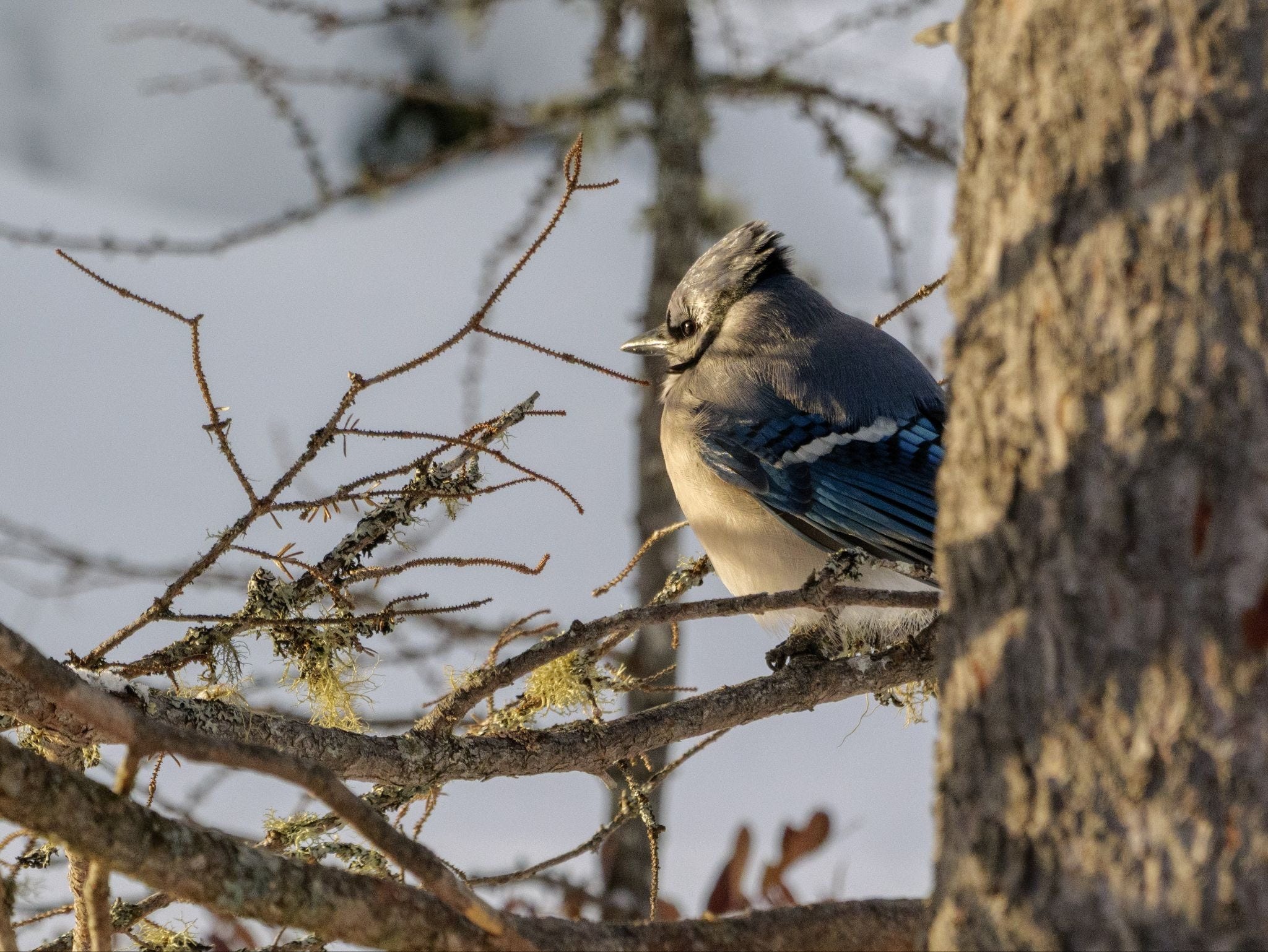
If, like me, you’re motivated by curiosity to learn more about nature, the warmer months can overwhelm the senses. The biodiversity of the Adirondacks is not huge but in July, when everything that lives is working to secure the future, there’s a lot going on.
Winter simplifies things. Some mammals are hibernating and the ones that aren’t leave helpful tracks in the snow. Many of the birds we see in summer have fled south, only about 30 species live year round in the central Adirondacks. Plants are buried under the snow and, best of all, the insects are laying low.
It’s easier to focus, which may be why I’ve noticed the Blue Jays.
What’s up with the Blue Jays
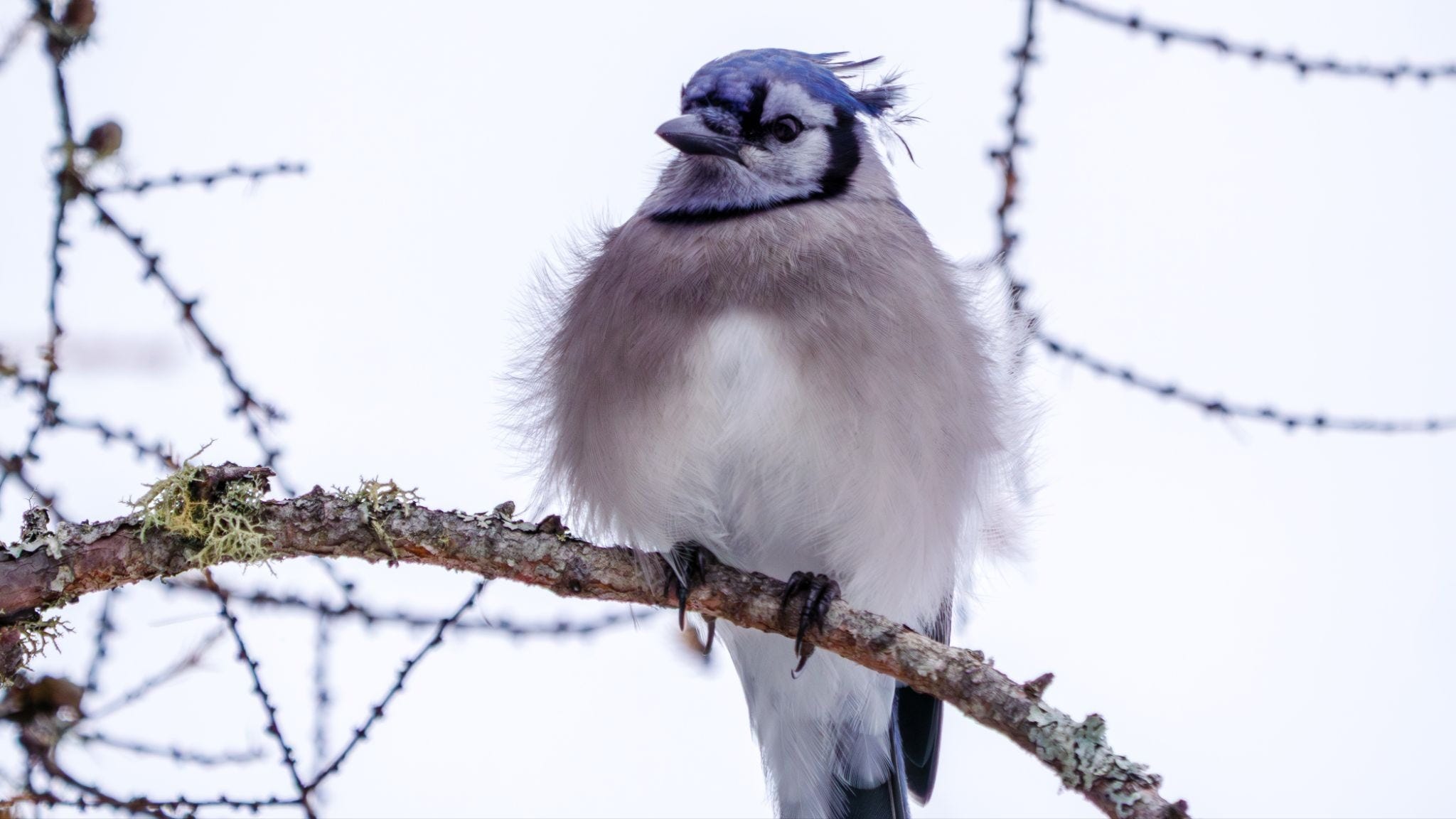
We have several bird feeders around the house and as winter 2025 has settled in Blue Jays have been ruling over the feeders. Blue Jays are a common and highly visible species and their presence stands in contrast with last year when we saw no Blue Jays in our area from November thru mid-April. And it’s not just that they have suddenly found our feeders. Over the past two weeks I’ve seen Blue Jays along the Sabattis road and squawking overhead while I skied the Cedarlands trail.
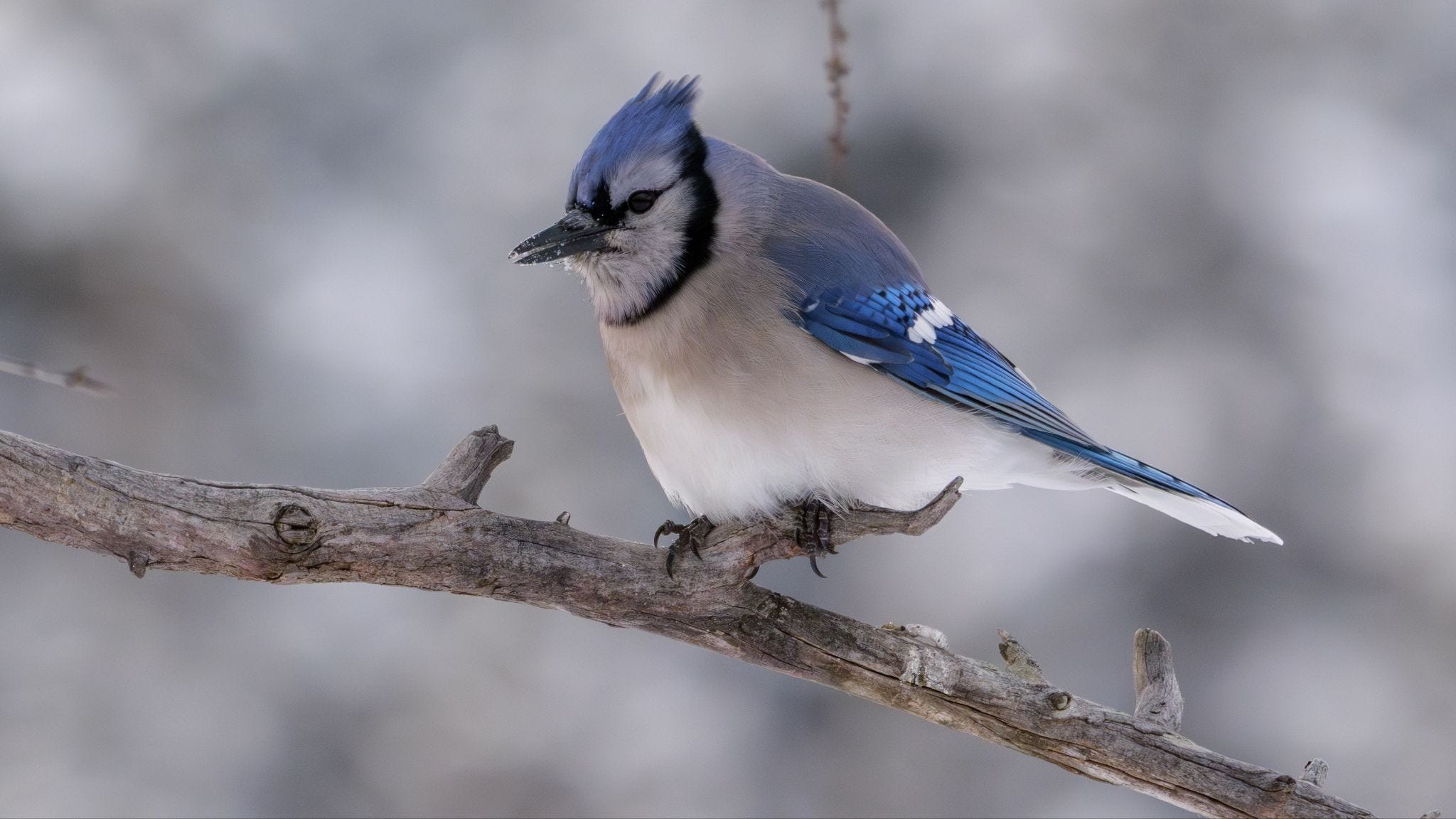
This got me wondering, do Blue Jays migrate to warmer places in the winter, or don’t they? And why some years and not others? The answer turns out to be more interesting than I had imagined. The Cornell All About Birds website notes, “Some (blue jays) are present throughout winter in all parts of their range. Young jays may be more likely to migrate than adults, but many adults also migrate. Some individual jays migrate south one year, stay north the next winter, and then migrate south again the next year. No one has worked out why they migrate when they do.”
That was unexpected. I’m familiar with irruptions and this is different. Irruptive migrations are believed to be driven by food availability and that does not appear to be what motivates the Blue Jay behavior. It also does not appear to be directly related to weather. When Blue Jays do head south they do so in mid-fall, before harsh weather could explain their departure. It seems that Blue Jays, like other members of the corvid family, move to the beat to their own drummer. This makes me appreciate them even more.
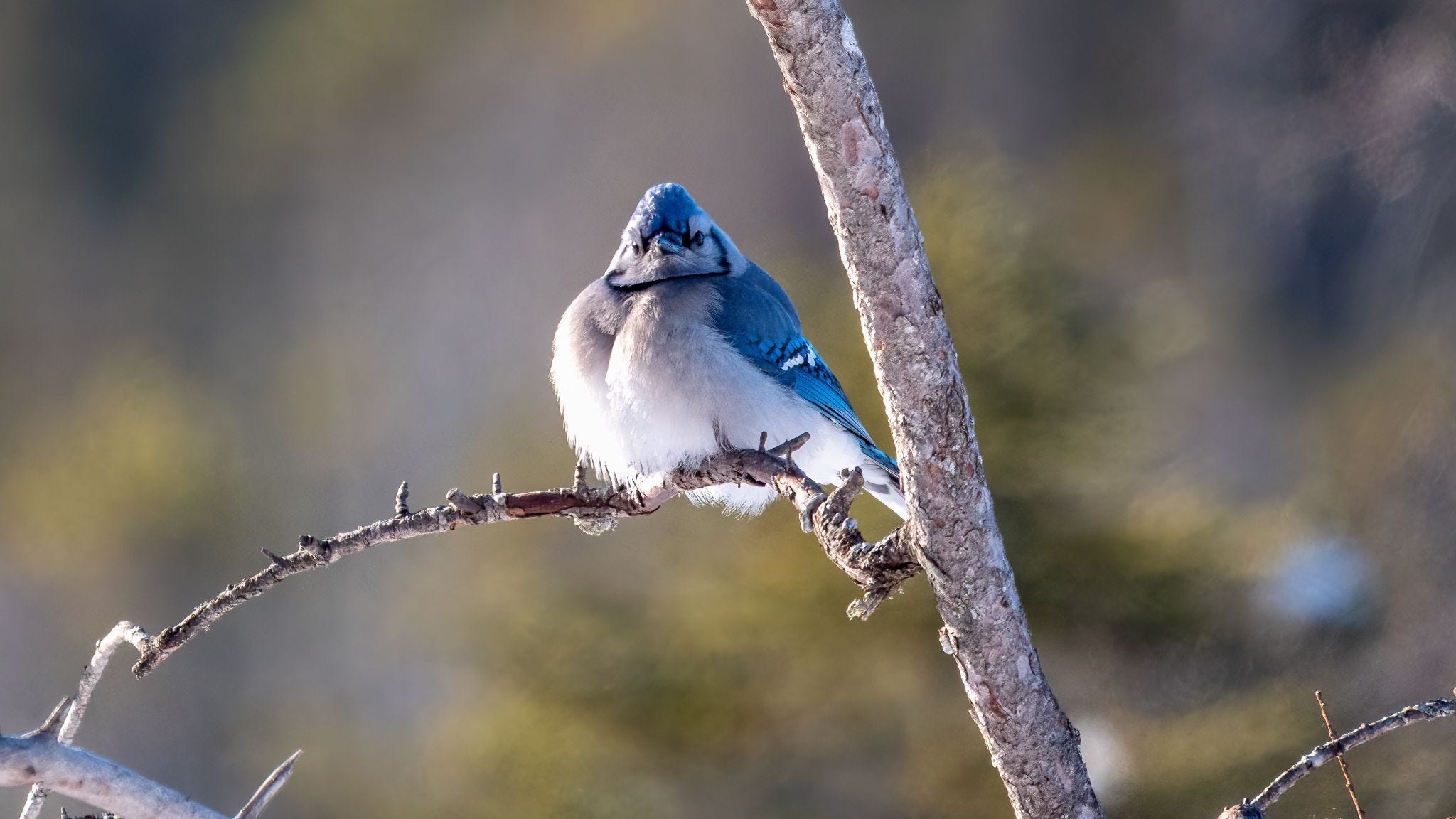
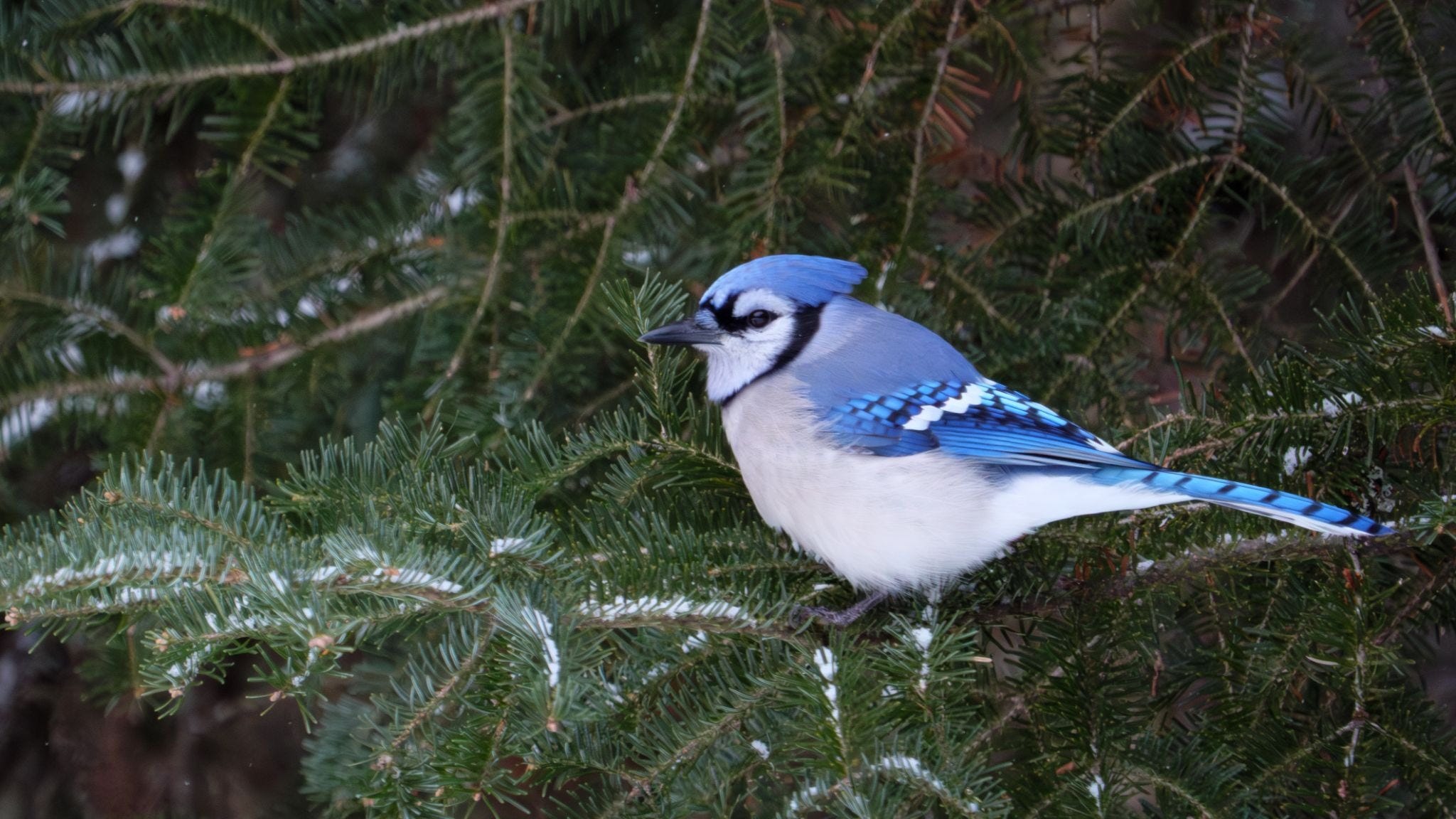
Some years we see them, some years we don’t. This picture and the next one are from 2022.
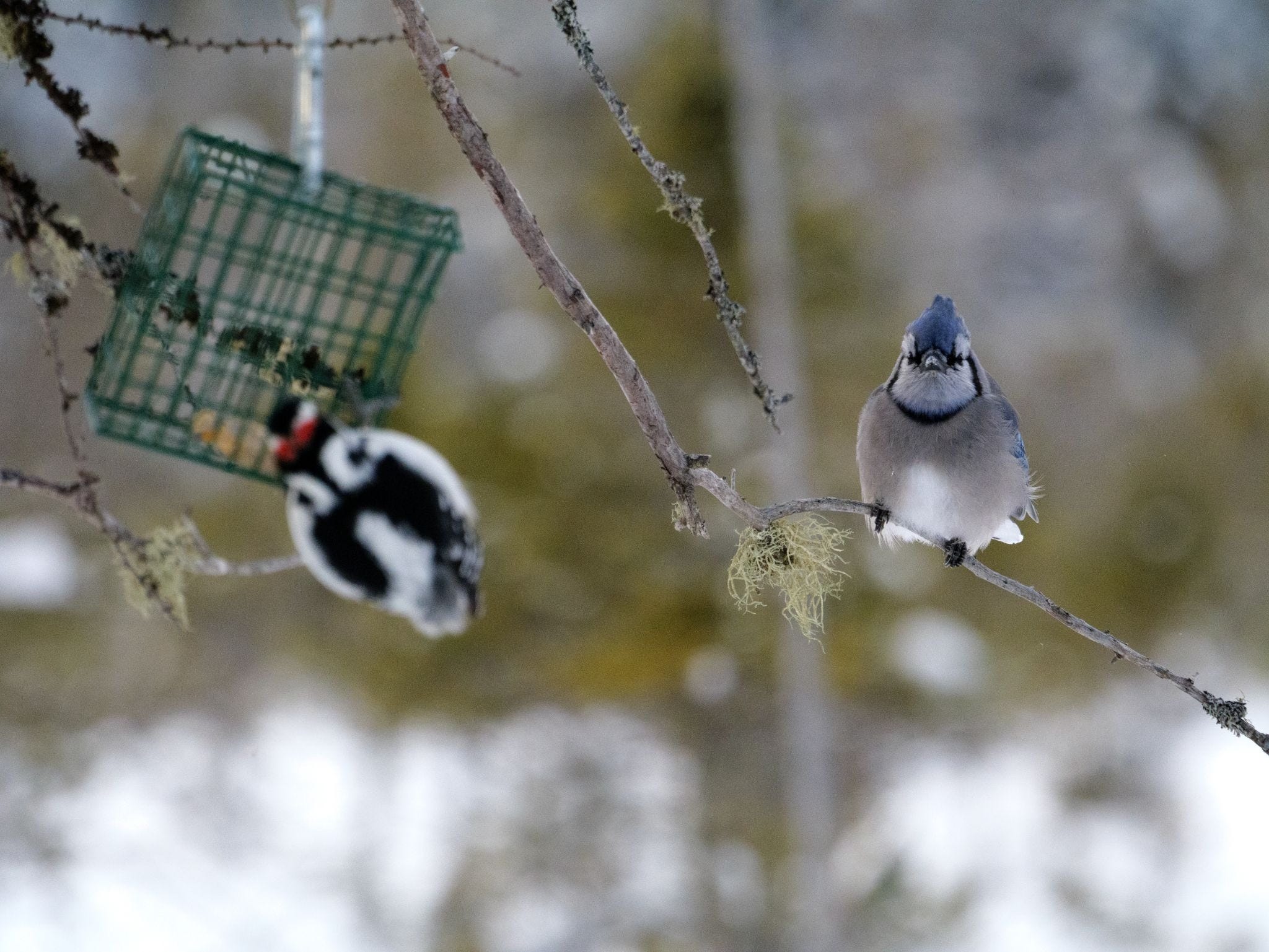
Blue Jays push the Chickadees and Nuthatches around, but they defer to Hairy Woodpeckers.
https://www.nrcm.org/blog/mysterious-migration-blue-jays/